Where Can You Hike With a Dog in the Columbia River Gorge?
A practical guide to leash rules, crowded trails, exposed terrain and routes that may suit your dog.
Research-based planning guide · Official information checked August 28, 2026 · Confirm posted rules before every visit
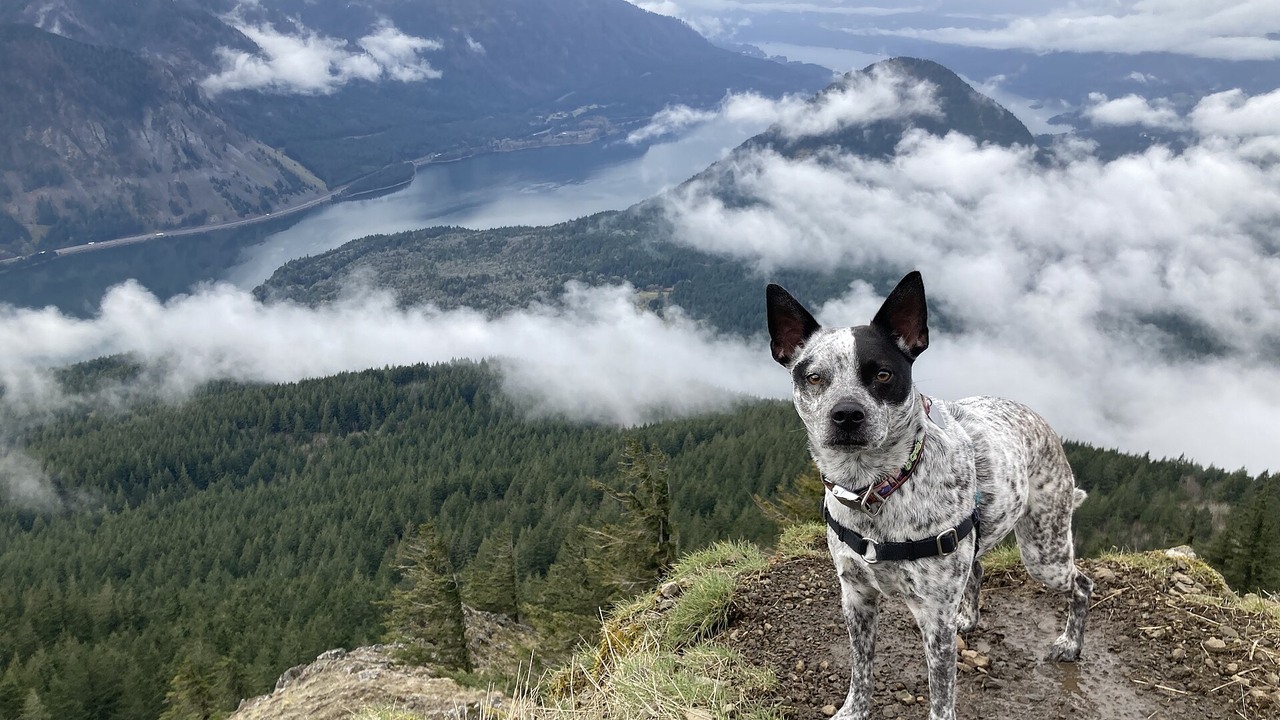
At Dog Mountain, steep and exposed terrain matters just as much as whether dogs are allowed. Photo: Mattsjc · CC BY 4.0
Start with the land manager, not the trail name
There is no single set of dog rules for the Columbia River Gorge. A hike may cross Oregon State Parks land, Washington State Parks land, a national forest, the Columbia River Gorge National Scenic Area or a Portland park. The agency that manages the land sets the rule, and nearby trails may follow different policies.
That is why a list of “dog-friendly hikes” is only a starting point. Before choosing a route, identify the exact trailhead and land manager, check the official page and look for posted notices when you arrive. Seasonal wildlife protections, restoration work and emergency closures can override the usual rule.
Before choosing a trail, ask two separate questions: Are dogs allowed, and will the trail suit your dog that day? A legal route may still be a poor choice because of crowds, narrow tread, heat, loose rock or a long climb without dependable water.
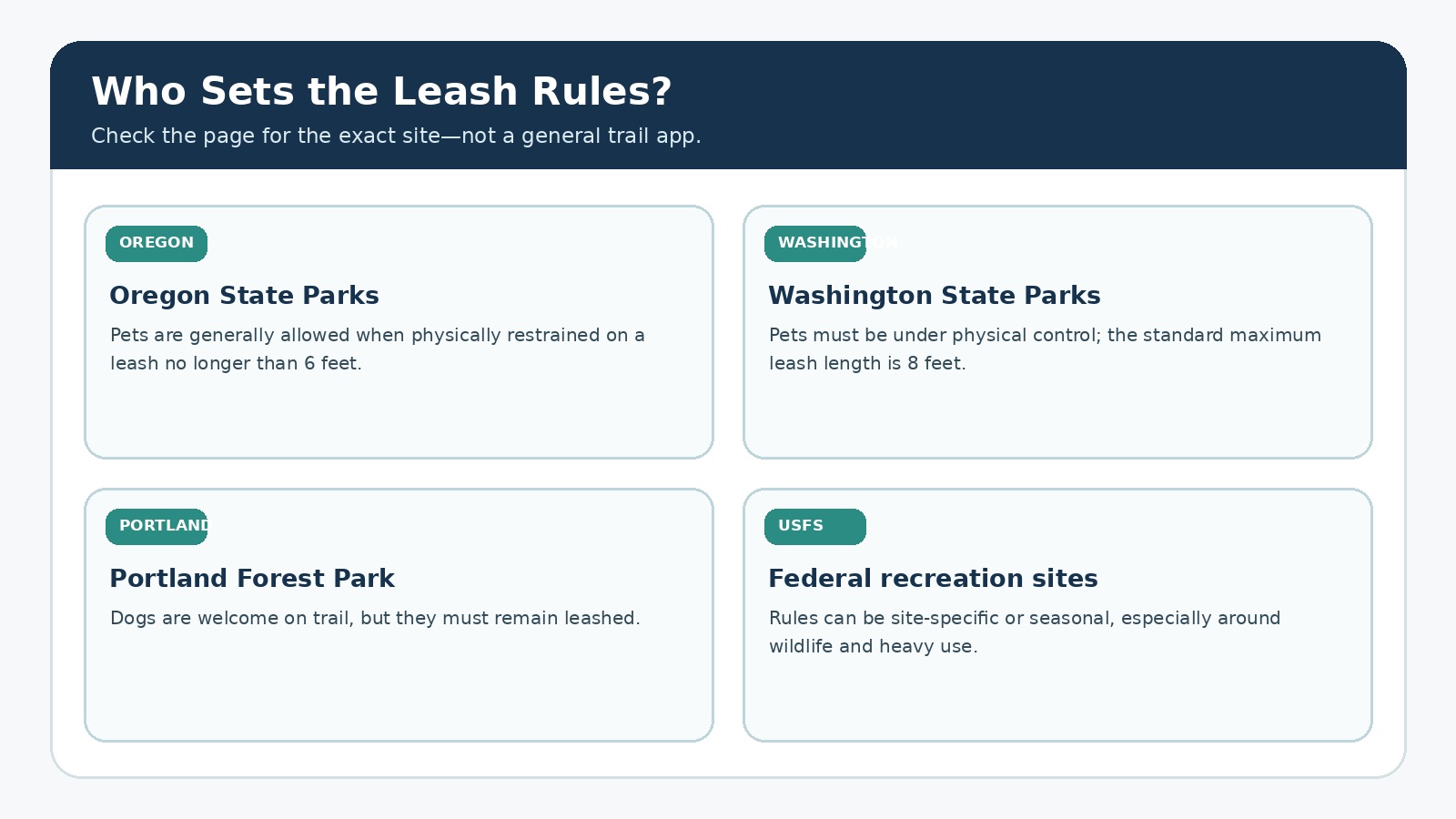
Leash length and seasonal requirements depend on who manages the site. Original editorial graphic; verify the exact trail page.
How leash rules differ across the Gorge
Oregon State Parks generally requires pets to be physically restrained on a leash no longer than 6 feet, except in a designated off-leash area or another specifically allowed setting. This rule applies at Oregon state park properties along the Historic Columbia River Highway, although site closures and posted restrictions may add further limits.
Washington State Parks requires pets to remain under physical control, with a leash no longer than 8 feet under the state rule. This is the standard rule at places such as Beacon Rock State Park, including the Hamilton Mountain area. Even when an 8-foot leash is allowed, keeping it fully extended may be impractical on stairs, switchbacks or crowded viewpoints.
Portland Parks & Recreation allows dogs in Forest Park only when they are leashed. Federal sites require more careful checking. Some national forest trails allow dogs without a general leash mandate, while individual recreation areas impose year-round or seasonal leash rules. Check the official page and trailhead signs instead of relying on a general statement about “Forest Service land.”
|
Area or manager |
Typical rule |
What to know |
|
Oregon State Parks |
Physical restraint; leash no longer than 6 feet under the statewide pet rule. |
Check the specific park page for closures and local notices. |
|
Washington State Parks |
Physical control; leash no longer than 8 feet under the state rule. |
Keep the leash short enough to pass safely on narrow tread. |
|
Forest Park, Portland |
Dogs must remain on leash. |
Shared trails can be busy with runners, cyclists and other dogs. |
|
Catherine Creek |
Dogs must be leashed year-round. |
Spring congestion and sensitive wildflower habitat make close control especially important. |
|
Coyote Wall |
Dogs must be leashed December 1 through June 30. |
Seasonal wildlife rules and trail closures can overlap. |
|
Multnomah Falls visitor area |
Pets must be leashed in parking areas, the plaza and paved trail sections. |
Crowds can make a short visit more demanding than the distance suggests. |
Leash rules that are easy to overlook
Catherine Creek and Coyote Wall sit near each other on the Washington side, but their dog rules are not identical. Catherine Creek requires leashes year-round. Coyote Wall requires leashes from December 1 through June 30, and the nearby Raptor Trail has a separate seasonal closure from February 1 through June 15. A route-planning app may show the trail line without making those distinctions obvious.
A short, fixed-length leash makes it easier to maintain control around other hikers, dogs and wildlife. This photo was taken elsewhere in Oregon and does not show conditions on a specific Gorge trail. Photo: Sheila Sund · CC BY 2.0
Multnomah Falls presents a different kind of challenge. The official site rule requires leashes in the parking areas, plaza and paved trail portions. Beyond the rule itself, the visitor area can be crowded and noisy, with little space between people and dogs. A dog that is comfortable on a quiet forest trail may find even a short visit here stressful.
At Sandy River Delta, the rules vary by area. Leashes are required on the Confluence Trail and in the parking area, while other parts of the recreation area are commonly used off leash. Pay attention to boundaries, keep a leash ready and follow posted signs rather than assuming every path from the same parking lot has the same rule.
Why a trail that allows dogs may still be a poor fit
Knowing that dogs are allowed is only the first step. You also need to consider how much control the trail requires. A broad riverside path and a narrow cliffside trail can feel completely different, even when dogs are permitted on both.
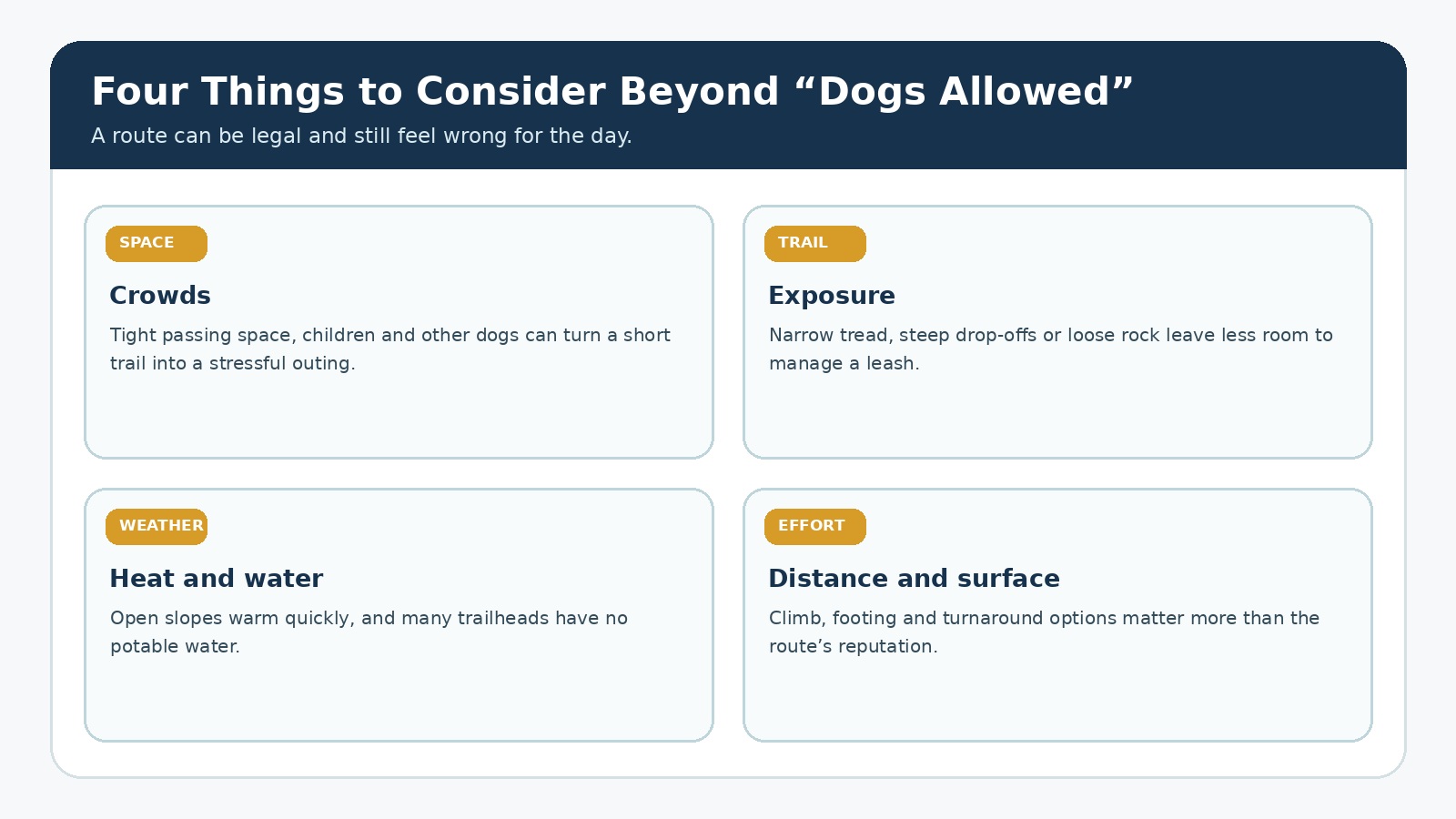
Four practical factors can matter more than the words “dogs allowed.” Original editorial graphic.
How crowds and narrow trails affect the hike
On a busy trail, you may need to pass other dogs, make room for children, keep the leash clear of trekking poles and avoid stepping into vegetation—all within a narrow stretch of tread. Multnomah Falls and other popular waterfall trails can be especially difficult when the parking area and viewpoints are already crowded.
Narrow or exposed routes add another concern. Eagle Creek has sections cut into basalt cliffs, and several Gorge ridges have loose footing or steep drop-offs. Consider whether you can manage your dog, the leash and oncoming hikers without losing your balance. Turning around is a sensible choice if the trail feels narrower or more exposed than expected.
Heat, water and exposed terrain
Eastern Gorge routes such as Catherine Creek, Coyote Wall and Dog Mountain receive more direct sun and often provide less shade than western waterfall trails. Water is often unavailable at the trailhead. Carry enough for the entire outing instead of relying on a creek, and choose a shorter route when the forecast is warmer than your dog is used to.
Pavement and dark rock can also warm quickly. At heavily developed sites, touch the surface with the back of your hand before committing to a long paved approach. On open slopes, watch for a change in pace, reluctance to continue or repeated attempts to find shade. This article does not replace veterinary advice; dogs with medical, age or mobility concerns need guidance tailored to them.
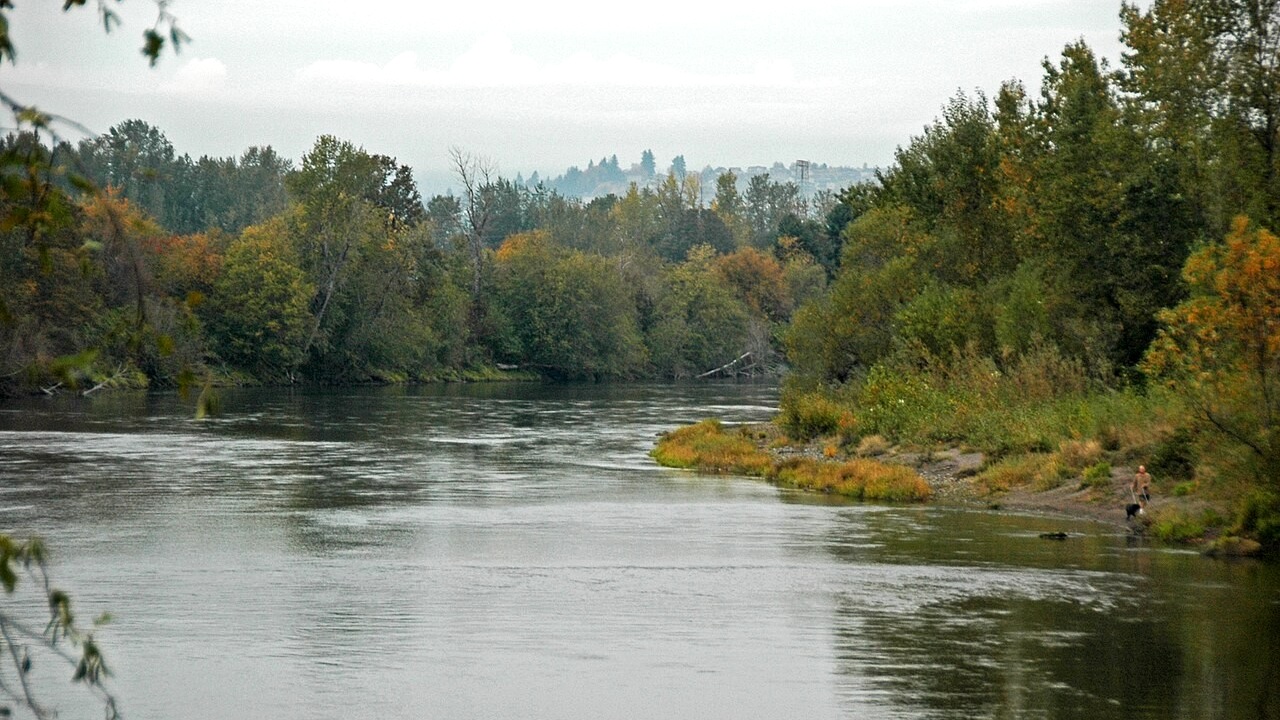
Sandy River Delta has more open space than many narrow Gorge trails, but leash rules still vary by area. Photo: James St. John · CC BY 2.0
Choose a route that fits your dog
Instead of asking for the single best dog-friendly hike, start with the kind of day your dog handles well. The examples below can help narrow your options, but weather, trail work and closures may still change the plan.
|
Trip style |
Places to consider |
Why it may suit your dog |
Check before you go |
|
Roomier, lower-elevation outing |
Sandy River Delta |
Broad terrain and flexible turnaround points provide more room. |
Leash-zone boundaries, river conditions and current signs. |
|
Shaded forest walk near Portland |
Forest Park |
Many route combinations make it easy to shorten the walk. |
On-leash rule, trail closures and shared-use traffic. |
|
Short waterfall visit |
Bridal Veil Falls or another state park stop |
Short mileage can work well for dogs that do not need a full-day hike. |
Six-foot leash rule, stairs, slick tread and crowds. |
|
Open spring scenery |
Catherine Creek |
Short loops offer spring wildflowers without a full-day commitment. |
Year-round leash rule, congestion, ticks, rattlesnakes and heat. |
|
Long, steep workout |
Dog Mountain |
A steep climb for an experienced, well-conditioned dog and handler. |
Permit dates, sun, water, crowds and whether the effort suits the dog. |
|
Snow-season outing |
Mirror Lake area |
A winter option for dogs and handlers prepared for snow travel. |
Sno-Park parking rules, snow depth, traction and winter navigation. |
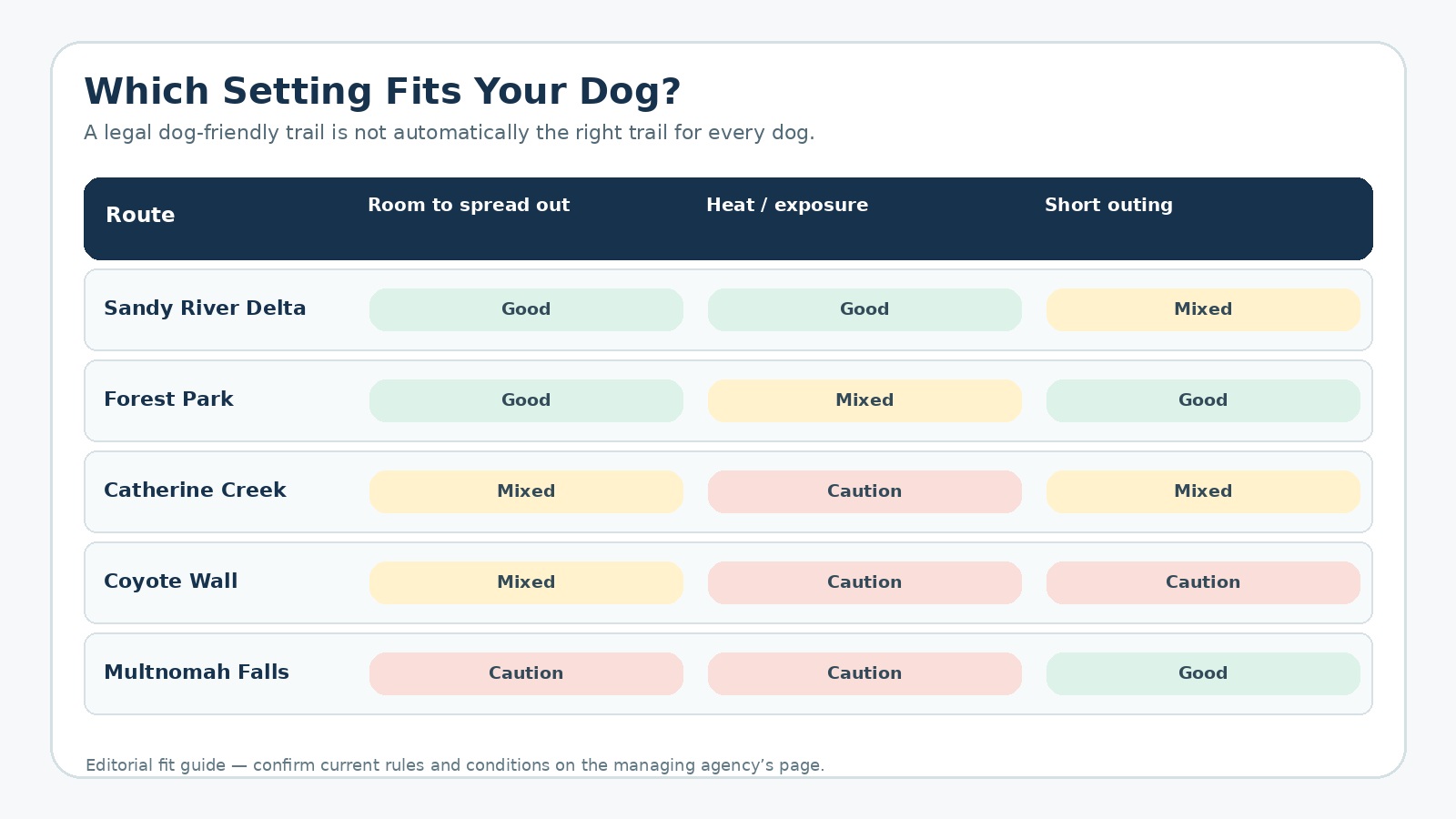
The setting matters more than a trail’s popularity. Original editorial graphic.
Wildlife, wildflowers and other trail users
A leash protects more than the dog. In the eastern Gorge, spring flowers grow in thin, easily damaged soils, and wildlife protections can close specific trails or require dogs to be leashed during certain months. Stay on signed routes, keep dogs out of flower meadows and respect closure fencing even when an older map shows a path continuing through the area.
Close control also makes passing easier. Step to the side where the tread is wide, shorten the leash before another group reaches you and ask before allowing dogs to greet. Pack out waste instead of leaving a bag beside the trail for the return trip. If there is no trash service, carry the bag out with you.
Before you head out
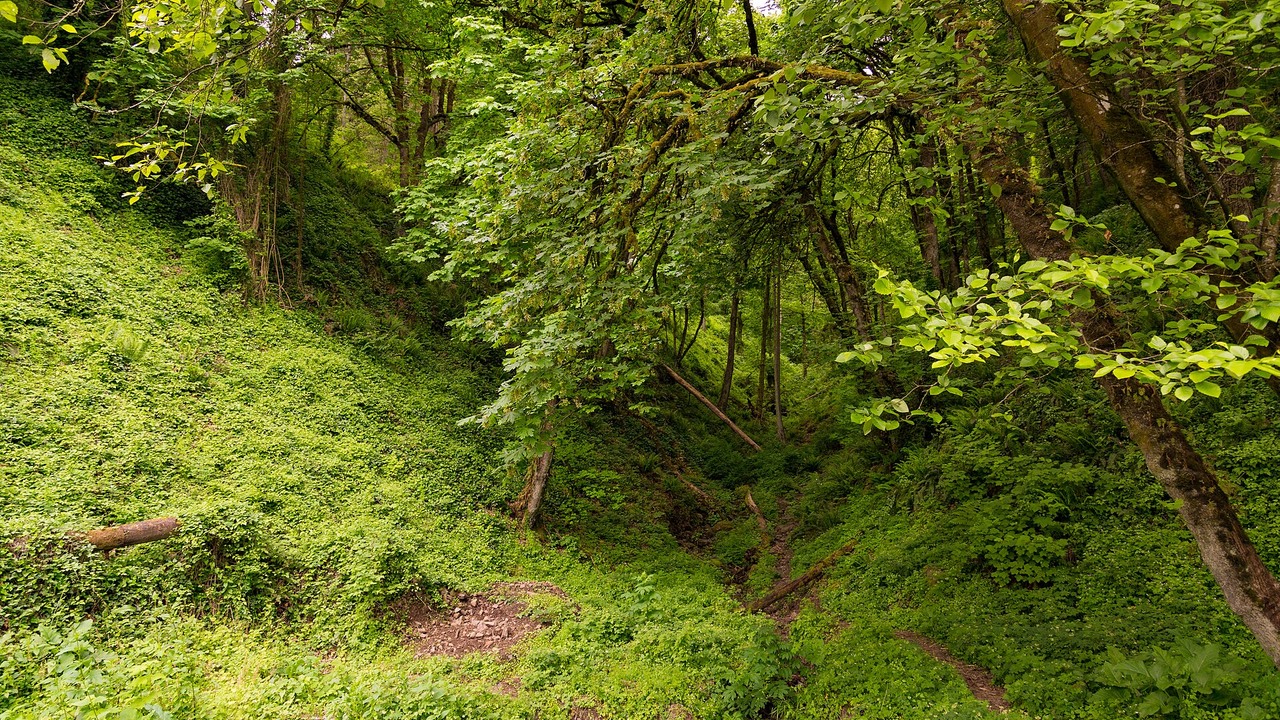
Forest Park offers shaded, on-leash trails, but narrow sections and busy shared routes still require close control. Photo: Tony Webster · CC BY-SA 2.0
Frequently asked questions
Are dogs allowed on Columbia River Gorge trails?
Dogs are allowed on many Gorge trails, but not under one universal rule. Leash length, seasonal requirements and closed areas depend on the managing agency and the exact site. Confirm the current official trail page before every trip.
Do dogs have to be leashed at all times?
Not everywhere, but many high-use sites require it. Oregon State Parks, Washington State Parks and Portland Forest Park have clear restraint rules. Federal recreation areas can use site-specific or seasonal rules, such as the year-round leash requirement at Catherine Creek and the December 1–June 30 requirement at Coyote Wall.
Is Dog Mountain a good hike for dogs?
Despite the name, Dog Mountain is not an easy choice for every dog. The trail is steep, exposed and crowded during wildflower season. A fit, trail-experienced dog may handle it, but heat, limited water, close passing and the long climb make it a poor choice for many dogs. Check the current permit and access rules as well.
Where can I take a shorter dog-friendly walk?
Forest Park offers many on-leash route combinations near Portland, and some Oregon State Parks waterfall stops provide short walks. Sandy River Delta offers more room and flexible turnaround options, but check which areas require a leash.
Related hiking guides
Official sources checked for this guide
Rules and conditions can change. These official pages were checked on August 28, 2026; check them again before you leave.